

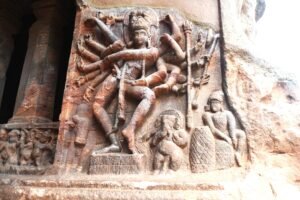
Photo copyright © Satyabrata Maiti
DISCLAIMER: I am not trying to repeat information that is available in the public domain. What my intention is to show the readers about our monumental efforts of the kings doing experiments and to conserve the heritage blending architecture, history, and natural beauty that we are supposed to inherit. But unfortunately, it was destroyed by the Mughals invasion. My effort is to encourage people to visit the site in witnessing this beautiful heritage and appreciate the art work of the artisans of our ancient India. Photos, that I am presenting here are not even 10% of what I captured for the limitation of space in a blog. It was a herculean task for me to restrict the number with great dis-satisfaction of missing many.
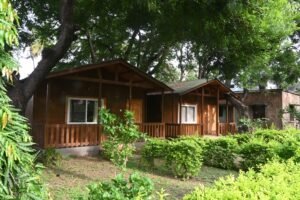
Encouraged by the sheer interest for ancient temples and their architectural marvel, I suddenly planned a visit to Badami and booked my ticket in 14806 Barmer-Yashwantpur AC Exp for 19-Jun-2026. My initial plan was only to cover Badami but when I shared this information with my friend colleague, Dr. S.R. Bhat, he advised me to add two more nearby locations, Pattadakal-a UNESCO heritage site and Aihole-an experimental site of temple architecture. I did my advance booking in KSTDC Maurya Chalukya hotel. On the day, I boarded the train at 8:15 am at Anand in the morning and reached Badami railway station at 3:00 am on early hours of 20-Jun-2026. Mr Nazeer, an auto owner whom I contacted before my arrival after getting his mobile # from the hotel, picked me up and dropped me in the hotel. Distance from the railway station to the hotel was about 5-6 km. I also fixed him for my all the three days’ trip to various places.
Chalukya
Badami
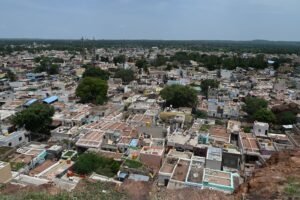
Badami, settled in the rocky sandstone cliffs of northern Karnataka, is a small town that beautifully blends history, architecture, and natural splendour. Once upon a time it was the capital of the Early Chalukya dynasty; today it stands as a living museum where ancient temples, serene lakes, and dramatic landscapes offering travellers going back to the past like in a time machine and also witnessing the brutality of the Mughals in destroying the art and culture of a nation.
Gateway to Chalukyan Glory
It was formerly known as Vatapi, rose to prominence in the 6th century under the Chalukyas. The rulers carved their legacy into the red sandstone hills, creating cave temples that remain as an architectural wonder marvel. For tourists, these monuments are not just relics but an absorbing experience of India’s early temple art and traditions.
Mr. Nazeer came to the hotel at 9:00 am and I was ready after having breakfast for the day long Badami visit. He decided the sequence of visiting various places as follows:
- Starting with visit to Banashankri temple
- Cave temples
- Archaeological museum
- Badami Fort
- Bhutanatha Temple
- Agasthya Lake
- Controversial cave along Agasthya lake
- Rock painting at Ranganatha hill
- Banashankari temple
The Banashankari Amma Temple is a respected 7th‑century shrine dedicated to Goddess Banashankari ( or Goddess Shakambari).. It is famous for its Dravidian architecture, annual Banashankari Jatre festival (January–February), and its unique eight‑armed idol seated on a lion subduing the demon Durgamasura.
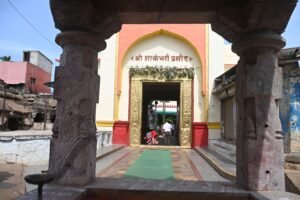
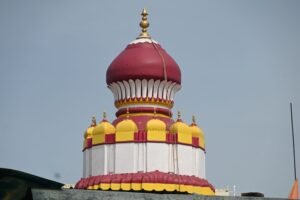
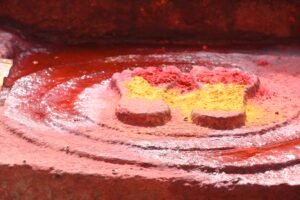
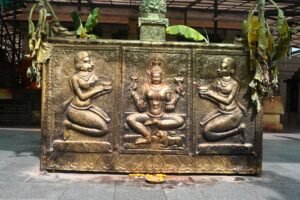
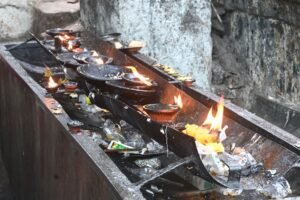
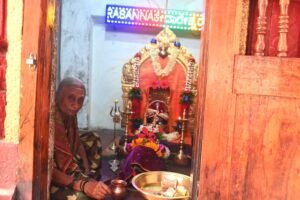
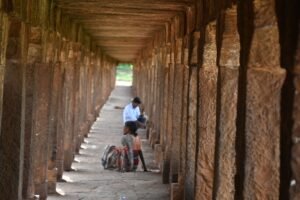
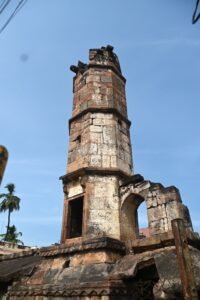
Banashankari Temple Highlights
| Feature | Details |
| Founded | 7th century (Badami Chalukyas) |
| Renovated | 18th century (Maratha rule) |
| Deity | Goddess Banashankari (Goddess Shakambari/Durga) |
| Idol | Eight‑armed, seated on lion, subduing demon Durgamasura |
| Festival | Banashankari Jatre (Jan–Feb) |
| Architecture | Dravidian + Nagara styles |
| Timings | 6 AM–1 PM, 4 PM–9 PM |
| Entry Fee | Free |
- The Cave Temples
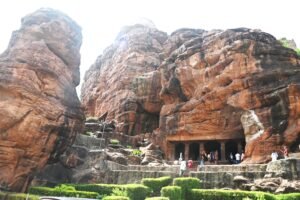
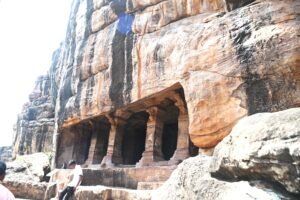
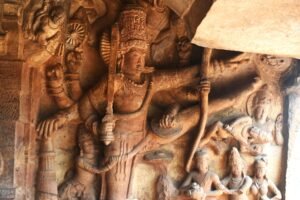
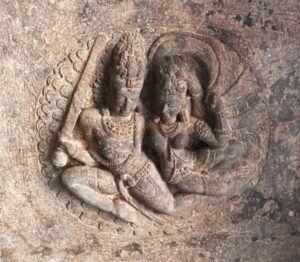
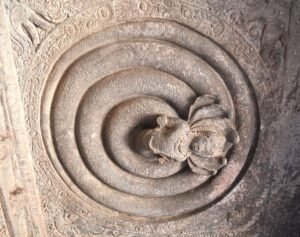
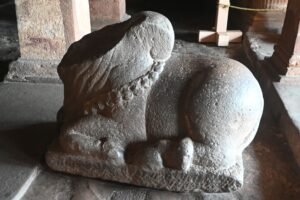
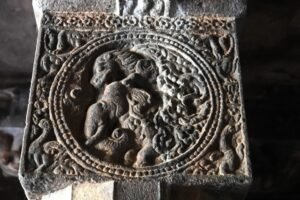
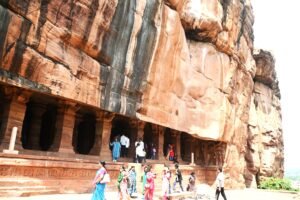
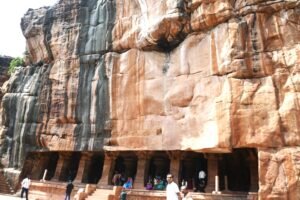
The highlight of four rock-cut cave temples is each carved into cliffs overlooking the town:
- Cave 1: Dedicated to Lord Shiva, featuring the iconic Nataraja with 18 arms in dynamic poses.
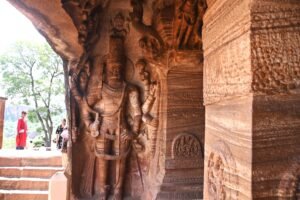
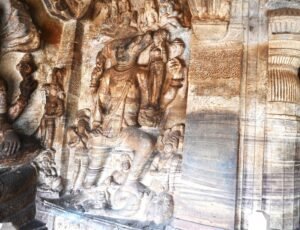
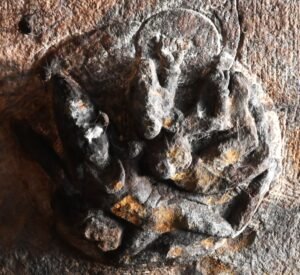
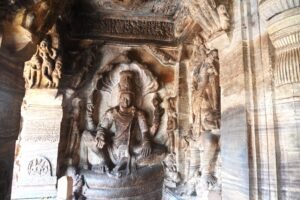
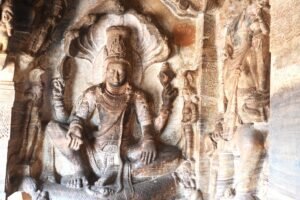
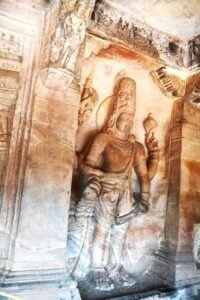
- Caves 2 & 3: Celebrating Lord Vishnu, with sculptures of Varaha lifting the Earth and Narasimha slaying the demon Hiranyakashipu.
- Cave 4: A Jain sanctuary with serene images of Mahavira and other Tirthankaras.
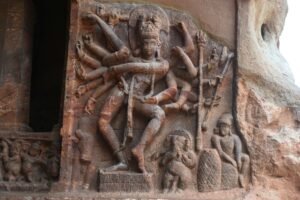
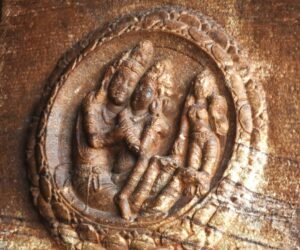
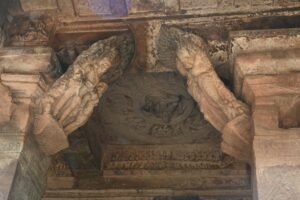
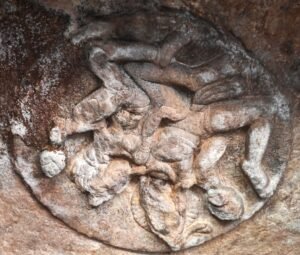
These caves are not only sacred spaces but also masterpieces of stone artistry, making them a must-see for heritage enthusiasts.
- The caves represent a critical transitional phase in Indian temple architecture. They blend northern Nagara architectural elements with southern Dravidian styles, a hallmark of the Badami Chalukya style that influenced subsequent temple construction across the Deccan region.
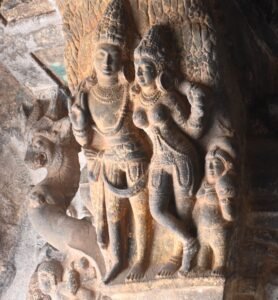
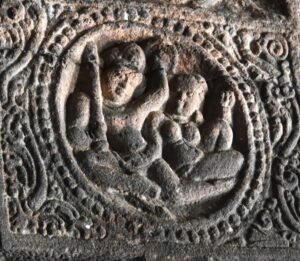
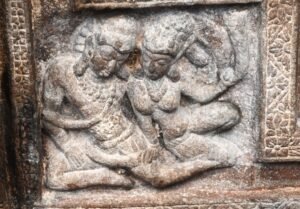
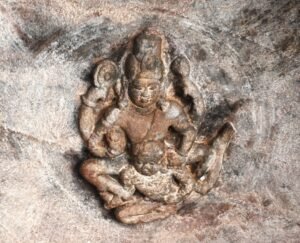
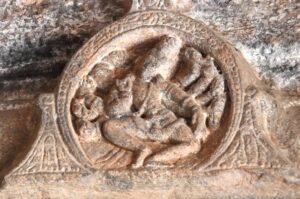
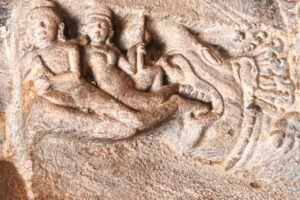
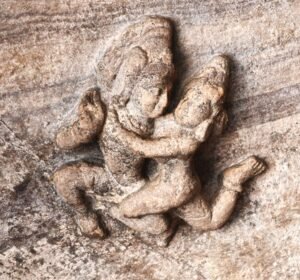
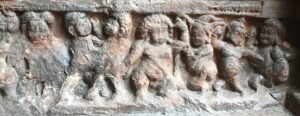
- Artistic Detail: The interiors are renowned for their intricate friezes, pillars, and bracket figures. The sculptures display remarkable precision, depicting gods, goddesses, and mythological narratives with great expressive detail.
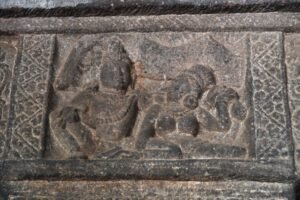
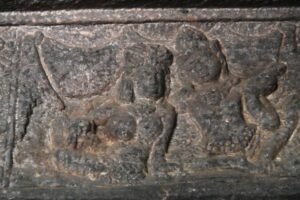
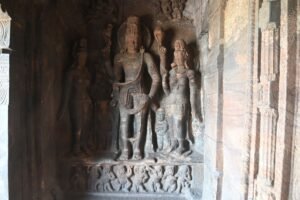
- Syncretism: The complex is a historic example of spiritual pluralism, as the shrines are dedicated to both Hindu and Jain traditions, reflecting the cosmopolitan and tolerant nature of the Chalukyan capital.
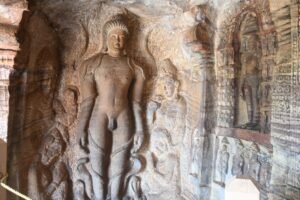
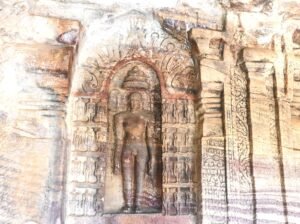
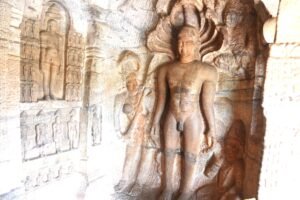
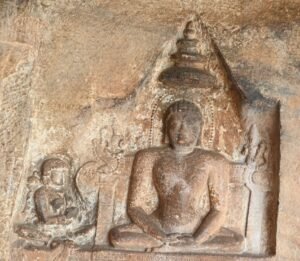
- Mural Paintings: Beyond stone carvings, fragments of early mural paintings survive in these caves. These are some of the earliest known examples of Hindu mural art in India, stylistically echoing the traditions of the Ajanta caves.
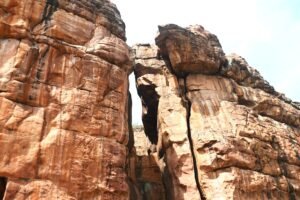
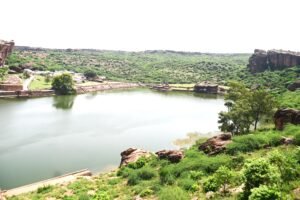
- Natural Setting: The caves overlook the Agastya Teertha, a man-made lake with stone-stepped embankments, which creates a serene and picturesque landscape that enhances the majesty of the sandstone cliffs.
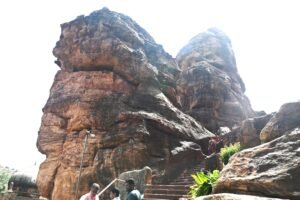
- Archaeological museum
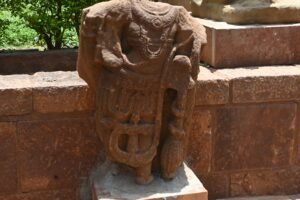
The Archaeological Museum is located at the base of hill fort and close to Agastya Lake. It is a compact but treasure-filled museum established in 1979 and formally opened in 1982 by ASI. It houses over 180 antiquities, including Chalukyan sculptures, inscriptions, hero stones, and prehistoric artifacts, and opens daily from 9:00 AM to 5:00 PM (closed on Fridays) with a nominal entry fee of ₹5.
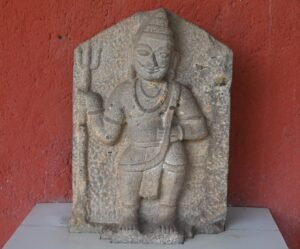
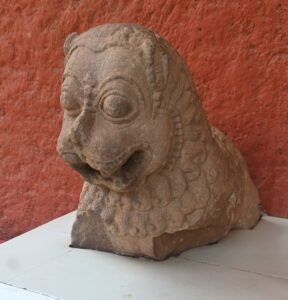
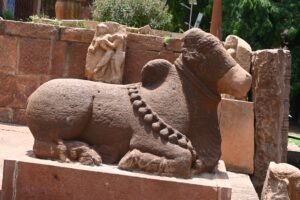
- Badami Fort
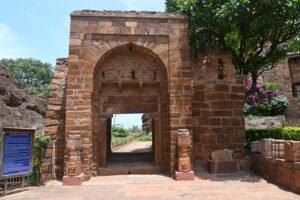
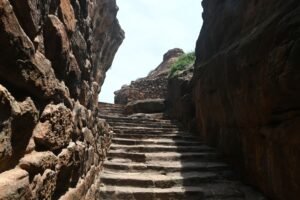
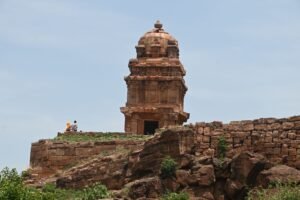
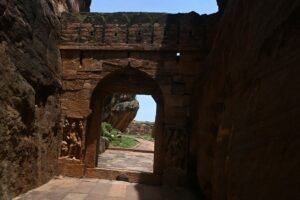
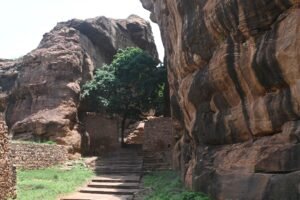
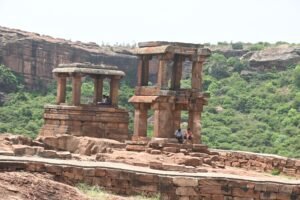
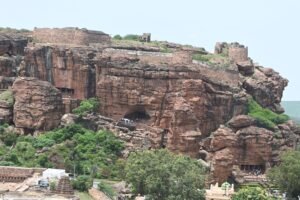
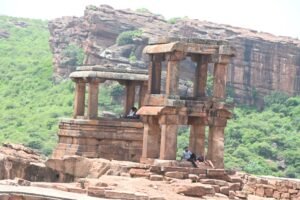
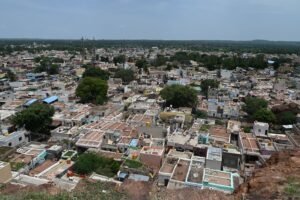
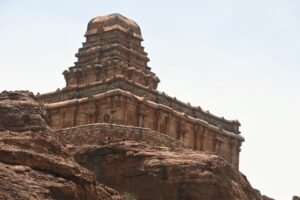
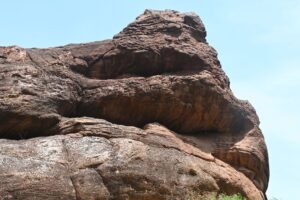
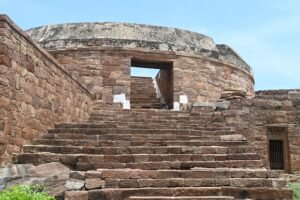
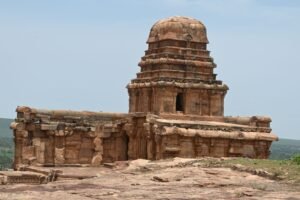
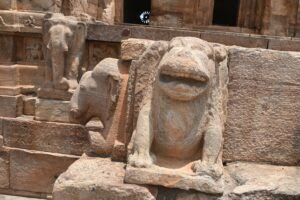
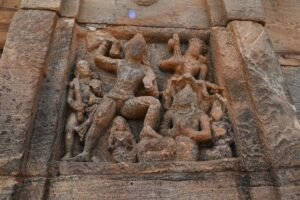
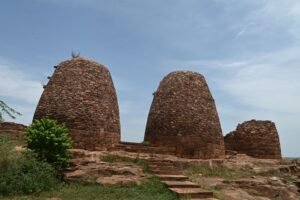
Badami Fort is a 6th‑century hill fortress built by Pulakeshin-I of the Chalukyas; Served as Chalukya capital until ~757 CE; Pulakeshin II (610–642 CE) expanded fortifications, built twin forts on northern and southern hills; later captured by Pallavas (642 CE); controlled by Vijayanagara Empire in 14th century; later held by Adil Shahi dynasty of Bijapur; captured by Tipu Sultan in 1786 during Maratha–Mysore wars; and today remains a striking ruin with temples, granaries, and panoramic views.
- Bhutanatha Temple
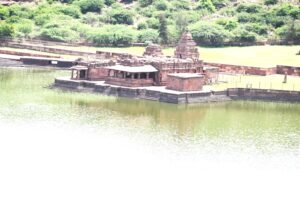
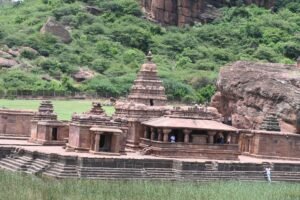
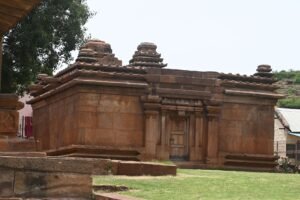
The Bhutanatha Temple is a 7th–12th century Shiva temple complex located on the eastern banks of Agastya Lake, renowned for its serene setting against red sandstone cliffs and its blend of Dravidian and Nagara architectural styles. It is one of the most iconic monuments of the Chalukya dynasty.
- Agasthya Lake
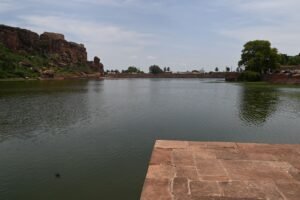
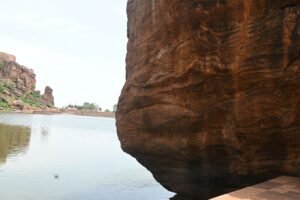
Agastya Lake is a historic and sacred water body that beautifully complements the heritage landscape of the town. It is not just a water body—it is the spiritual and visual heart of Badami, binding together its temples, caves, and fort into a harmonious landscape.
- Controversial cave along Agasthya lake
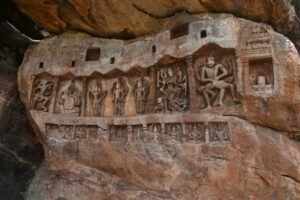
The “controversial cave” along Agastya Lake refers to a small, little‑known rock‑cut shrine near the Bhutanatha group of temples, carved into the boulder called Panchalinganaphadi. Unlike the famous cave temples, this cave is unusual because it contains no deity—only a painted ochre circle symbolizing the sun—leading to debate about its purpose and significance.
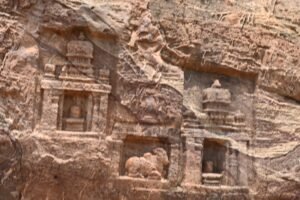
After the visit to Lake, we took a lunch break and enjoyed Jowar roti with local vegetables and rice.
- Rock paintings at Ranganatha hill
After lunch I trek with a local guide to the back side of Ranganatha hill which is usually used for rock climbing training. Rock paintings were similar to Bhim Vetka and forest types. I am told that there are three more places where such Rock paintings are seen near Badami.. It is thought provoking to watch the similar art forms in such a distant places with similar themes. Today I walked 16 km including trekking and Rock climbing.
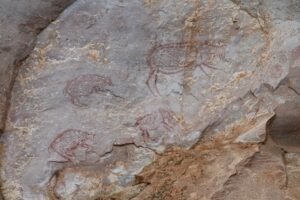
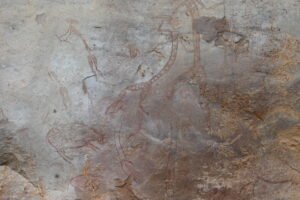
I returned to the hotel by late afternoon with one unfulfilled desire of photography at sunset, when the temple glows in the setting sun light which reflects in Agastya Lake due to the cloudy weather.
In conclusion: Badami visit was more than a destination—it was an experience of feeling India’s ancient soul. Whether exploring cave temples or savouring local Flavors, I found immerse pleasure in the town where history, spirituality, and nature converge. Badami remains one of Karnataka’s most captivating heritage sites, offering every traveller a journey through time carved in stone.
(To be continued…….)
Jai Bharat!
Satyabrata Maiti
Acknowledgement
My sincere thanks to:
- S. R. Bhat for his very useful and timely suggestion.
- Nazeer for not only taking me in various places but also coming forward to show me out of the track temples.
- Geetha, K. A. for going through the manuscript and offering some very useful suggestions.
References
- Wikipedia
- Online information sources
- Youtube videos


